The Memorable Order of Tin Hats
More than an organisation. More than a uniform. M.O.T.H. is a continuing bond of comradeship, mutual help and remembrance — carried forward from one generation of veterans to the next.
Born From Remembrance
The story of M.O.T.H. began with one veteran’s concern that the comradeship forged in war should not simply disappear when the fighting ended.
7 May 1927 — Durban, South Africa
The Memorable Order of Tin Hats was founded in Durban on 7 May 1927 by Charles Alfred Evenden, better known as Moth “O” or “Evo”.
Evenden had served with the Australian forces during the First World War and was wounded at Gallipoli. After the war he settled in Durban and worked as a cartoonist for the Natal Mercury.
In 1927, after seeing a war film showing soldiers marching in steel helmets and carrying their trench equipment, Evenden began thinking about the comrades he had served alongside: where they were, how they were living and what had become of the bond that had existed at the front.
From that idea came the famous theme of “Forgetfulness” and, shortly afterwards, the formation of the Memorable Order of Tin Hats.
Charles Alfred Evenden
Founder of the Order
The Founder
Charles Alfred Evenden
Charles Evenden’s experience of war, comradeship and the difficulties faced by returning servicemen became the foundation of the M.O.T.H. idea.
His vision was not simply to create another veterans’ association. It was to preserve the friendship and mutual responsibility created by frontline service and carry those principles into civilian life.
The idea spread rapidly after the Order was established, eventually developing into a network of Shellholes and Commands.
The Three Ideals
Everything M.O.T.H. does is rooted in three simple but demanding ideals.
True Comradeship
Practising the friendship and loyalty developed on the frontline in civilian life, without divisions of status or background.
Mutual Help
Recognising a personal and collective obligation to help fellow comrades, just as comrades relied upon one another during service.
Sound Memory
Remembering those who fell and keeping their memory alive through meaningful, practical acts of remembrance.
The Emblem of the Order
The M.O.T.H. emblem carries the history and ideals of the Order in a single symbol.
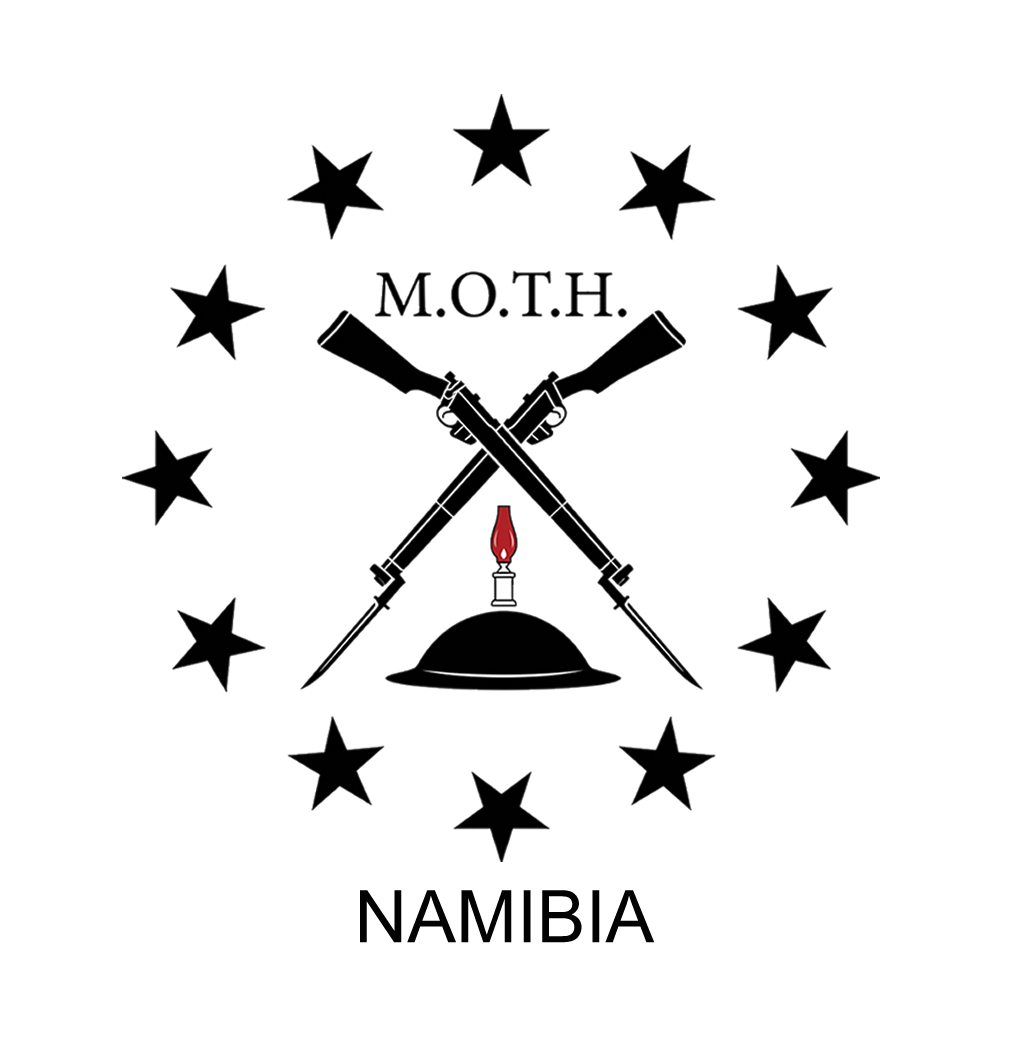
The Tin Hat & Candle
At the centre of the emblem is the Tin Hat, described by M.O.T.H. as being hallowed by the Light of Service. It is accompanied by the symbols of sacrifice, mutual help and remembrance.
The Colours of M.O.T.H.
The three-colour identity reflects the three armed services from which the Order originated.
The M.O.T.H. flag is composed of three equal vertical panels: dark blue, red and air-force blue, representing the Navy, Army and Air Force. The Tin Hat and Candle emblem sits at the centre of the flag.
The Shellhole
Where the ideals of the Order become a living part of the veteran community.
What Is a Shellhole?
Units of the M.O.T.H. Order are known as Shellholes. They provide the local home of comradeship — places where members can meet, conduct meetings, commemorate important occasions and maintain the traditions of the Order.
Shellholes operate within the wider M.O.T.H. command structure and are connected through Command Headquarters structures.
In Namibia, the Shellhole network forms an important part of maintaining M.O.T.H. traditions and keeping veteran history alive.
Explore Namibia’s Shellholes →M.O.T.H. in Namibia
Namibia Command forms part of the wider M.O.T.H. tradition while maintaining its own local history, comrades and Shellholes.
Namibia Command
The official M.O.T.H. Shellhole archive identifies Blacksheep Windy ‘Ole as operating under Namibia Command. Namibia Command provides the national framework connecting the country’s M.O.T.H. activities and Shellholes.
A Living Tradition
Namibia’s M.O.T.H. history is not confined to old photographs and records. Comrades continue to gather, remember, commemorate and preserve the stories of those who served before them.
Remembering Namibia’s Military History
M.O.T.H. remembrance in Namibia also connects with the country’s wider military history. Veterans and comrades have taken part in commemorations at important historic sites, ensuring that remembrance remains an active part of the Order.
One documented example is the 2015 Khorab commemoration, where representatives associated with M.O.T.H. Command HQ and Escarpment Shellhole participated in remembrance activities.
These occasions demonstrate an important part of the M.O.T.H. tradition: remembrance is not simply looking backwards. It is actively preserving history so that future generations understand the sacrifices and experiences of those who came before them.
Enter History & Remembrance →Sound Memory
To remember is not merely to speak a name. It is to keep the memory of a comrade alive through action, tradition and service.
Carry the Tradition Forward
M.O.T.H. survives because comrades continue to practise its ideals. If you would like to learn more about becoming involved with M.O.T.H. Namibia, discover the Shellholes and contact Namibia Command.